Last Update:
Quality pipe relining is designed to last 50+ years. Learn what affects its lifespan, how guarantees work, and why professional installation matters.
Understanding the Lifespan of a Relined Pipe
If you're weighing up pipe relining, it's a fair question to ask before you spend the money: is this actually a permanent fix, or will you be paying for it all over again in a few years?
Here's the honest answer. A quality pipe relining job isn't a temporary patch, it's engineered to last 50 years or more, which for most homeowners means it's effectively permanent: a one-time repair you won't need to touch again while you own the property. But "permanent" comes with conditions worth understanding, because the lifespan depends on how the job is done, the state of your existing pipe, and how you treat your drains afterward. This guide explains how long relining really lasts, what the guarantees mean, and the honest factors that can shorten or extend its life.
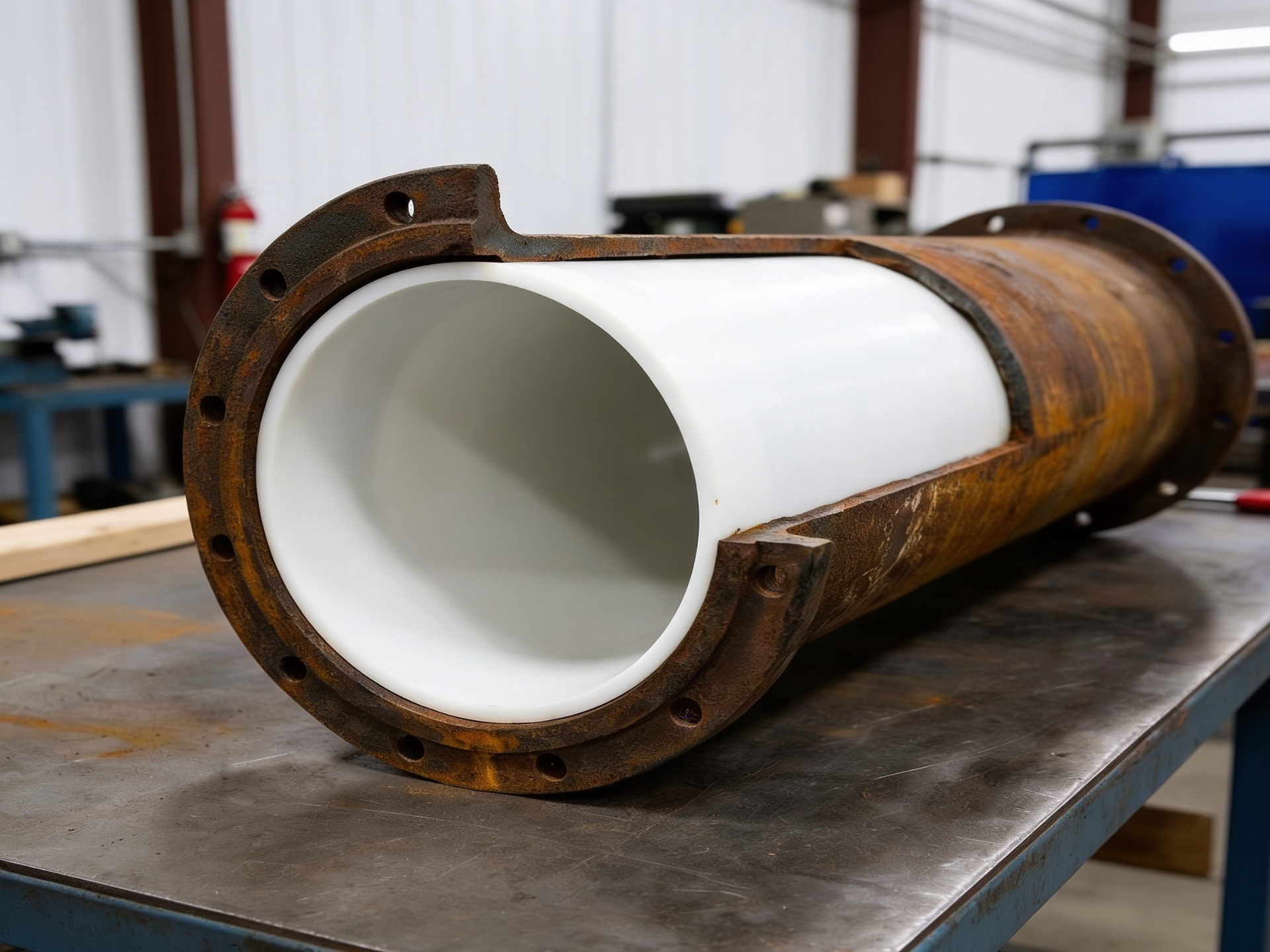
How long does pipe relining actually last?
The relining process creates a new, seamless pipe inside your old one, a resin-saturated liner is installed and cured until it hardens into a structural pipe wall. Because that new pipe is jointless and corrosion-resistant, it's built to outlast the original.
Across the industry, properly installed cured-in-place pipe (CIPP) relining is engineered for a 50-plus year service life, and in many cases 50 to 60 years. That figure isn't just marketing — it's supported by engineering standards and decades of field performance. The very first CIPP liner, installed in 1971, is reportedly still in service today.
To put that in perspective: 50-plus years is comparable to, or better than, the expected lifespan of a brand-new PVC pipe installed by traditional dig-up replacement. So when you reline, you're not getting a lesser, stopgap version of a new pipe — you're getting performance on par with one, without digging up your property.
Why relining lasts so long
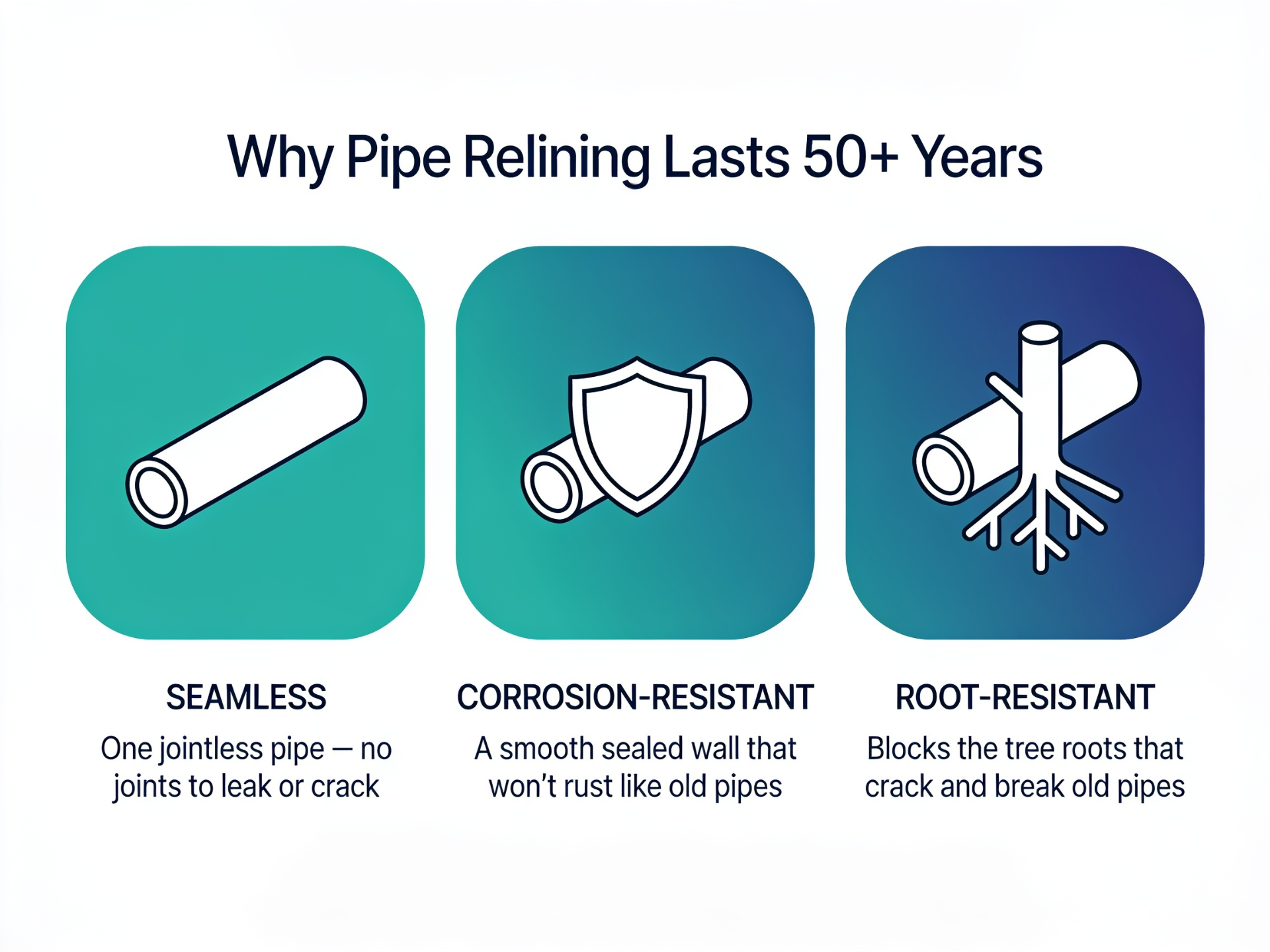
Three features of a quality reline are what give it that decades-long lifespan:
It's seamless. Joints are where pipes leak and where tree roots find their way in. Because a relined pipe is one continuous, jointless structure, it removes the weakest points of the original — which is a major reason a lined pipe can outlast the pipe it was installed into.
It's corrosion- and root-resistant. The cured liner forms a smooth, impervious internal wall that resists the corrosion that destroys old metal and clay pipes, and the root intrusion that cracks them open. These are the two most common causes of pipe failure, and a good reline neutralises both.
The curing method matters — and UV is the strongest. Not all liners are cured the same way. Conventional epoxy liners are reliable, but UV-cured liners deliver stronger long-term durability. At Wilco Relining, this is exactly the method used — a UV-cured liner, certified to the CIPP standard (WMTS-518:2017) and made from European materials designed to be significantly stronger than standard PVC, which is part of why the work is backed by a 50+ year guarantee.
The honest part: what can shorten a reline's lifespan
A guide that only tells you the good news isn't being straight with you. A reline is built to last 50-plus years — when it's done right and looked after. Here's what actually determines whether it reaches that lifespan.
The quality of the installation. This is the biggest factor by far. Poor workmanship — incomplete curing, wrinkles in the liner, uneven resin, or inadequate cleaning of the host pipe first — can cut a 50-year liner down to as little as 10 to 15 years. This is precisely why who does the work matters more than almost anything else, and why certification and a proper guarantee are worth seeking out.
The condition and prep of your existing pipe. The liner needs a sound, properly cleaned host pipe to bond to. A reputable installer inspects with a CCTV camera and jets the line clean before relining — skipping that step compromises the result.
How you treat your drains afterward. A reline is durable, not indestructible. Repeated use of harsh chemical drain cleaners can gradually erode the liner, and flushing non-degradable wipes causes abrasion over time. Enzyme-based cleaners and sensible drain habits help the liner reach its full service life.
The bigger picture of your pipe system. A spot repair fixes one section beautifully, but it doesn't reset the rest of an old line. If the surrounding pipe is widely deteriorated, other sections can fail later even while the relined section stays perfect — which is why a good installer assesses the whole line and recommends full-length relining where it's warranted, rather than a series of isolated patches.
The reassuring takeaway: every one of these factors is manageable, and the most important of them — installation quality — is entirely within your control when you choose a certified, guaranteed specialist.
What does a relining guarantee actually mean?
A long guarantee is one of the clearest signals you're getting a quality, permanent repair — a company doesn't back work for decades unless it's confident the work will last decades. When you compare providers, look closely at the guarantee: how long it runs, exactly what it covers, and whether it's backed by recognised certification like the CIPP standard.
A 50-year guarantee, as Wilco Relining provides, is designed to give you confidence that this is genuinely a once-in-a-lifetime repair for your home, not something you'll revisit. If you're also weighing up the investment, our guide on pipe relining costs in Sydney breaks down what you're paying for and why it works out cheaper than dig-up replacement over time.
Frequently asked questions
Is pipe relining a permanent fix?
For practical purposes, yes. A quality pipe relining job is engineered to last 50 years or more — comparable to or better than a new pipe — which means for most homeowners it's a permanent, one-time repair you won't need to redo while you own the property. It isn't literally indestructible, and its lifespan depends on correct installation, the condition of your existing pipe, and how you treat your drains, but a properly done reline by a certified installer is a genuine long-term solution rather than a temporary patch.
How long does pipe relining last?
Properly installed pipe relining lasts 50 years or more, and often 50 to 60 years. This is supported by engineering standards and decades of real-world performance — the first cured-in-place liner, installed in 1971, is reportedly still working. UV-cured liners, like those used by Wilco Relining, tend to offer the strongest long-term durability. The key condition is professional installation, since poor workmanship can dramatically reduce that lifespan.
Will I ever need to get pipe relining done again?
In most cases, no — not in your ownership of the home. A quality reline is built to outlast the original pipe and perform like a new one for half a century or more. You may need it again only if it was poorly installed the first time, if a different, un-lined section of your pipe system later fails, or if the liner is damaged by ongoing misuse such as harsh chemical cleaners. Choosing a certified, guaranteed specialist is the best protection against ever needing a repeat.
What can make pipe relining fail early?
The most common cause is poor installation — incomplete curing, wrinkles in the liner, or failing to properly clean the host pipe first can cut the lifespan from 50 years to as little as 10 to 15. Other factors include an existing pipe in very poor condition, repeated use of harsh chemical drain cleaners that erode the liner, and flushing items that cause abrasion. Using a certified installer with a strong guarantee addresses the biggest risk by far.
Does relining last as long as replacing the pipe?
Yes — and often longer. A quality reline is engineered for a 50-plus year service life, on par with a new PVC pipe installed by traditional excavation. Because the relined pipe is seamless and resistant to the corrosion and root intrusion that destroy original pipes, it can actually outperform the pipe it was installed into, while avoiding the cost and disruption of digging up your property.
How do I make my pipe relining last longer?
Three things help most: choose a certified installer with a long guarantee so it's done correctly from the start; avoid harsh chemical drain cleaners (enzyme-based products are gentler on the liner); and don't flush wipes or non-degradable items. A CCTV check every few years can also catch any minor issue early before it compounds, helping your reline reach its full 50-plus year service life.
Get a permanent fix, backed by a 50-year guarantee
If you want a repair you can genuinely forget about, relining done properly is exactly that — a new pipe inside your old one, built to last half a century or more. The thing that determines whether you get that full lifespan is who does the work.
Wilco Relining uses UV-cured, CIPP-certified liners and backs every job with a 50+ year guarantee. We start with a CCTV camera inspection so you can see the actual condition of your pipe, then give you a fixed, written quote before any work begins — no digging, no guesswork.
Book your free CCTV inspection and fixed quote — call 1300512737 or request a quote online. Get it done once, and get it done right.
This article provides general information about pipe relining durability and is not a guarantee of performance for any specific pipe. Actual lifespan depends on installation, pipe condition, and usage. Contact a certified relining specialist to assess your situation.