Last Update:
Discover why tree root blockages keep coming back and why clearing the roots only treats the symptom. This article explains how roots enter damaged pipes, why repeated clearing can lead to ongoing blockages, and how pipe relining creates a seamless barrier that helps prevent roots from returning. It also covers when CCTV inspection is needed, when relining may not be suitable, and why relining can be a more cost-effective long-term solution.
If you've cleared the same tree root blockage more than once, you already know the frustrating part isn't the blockage itself, it's that it keeps coming back. That's not bad luck. It's how root intrusion actually works, and understanding the mechanism is exactly what explains why clearing alone never really solves it.
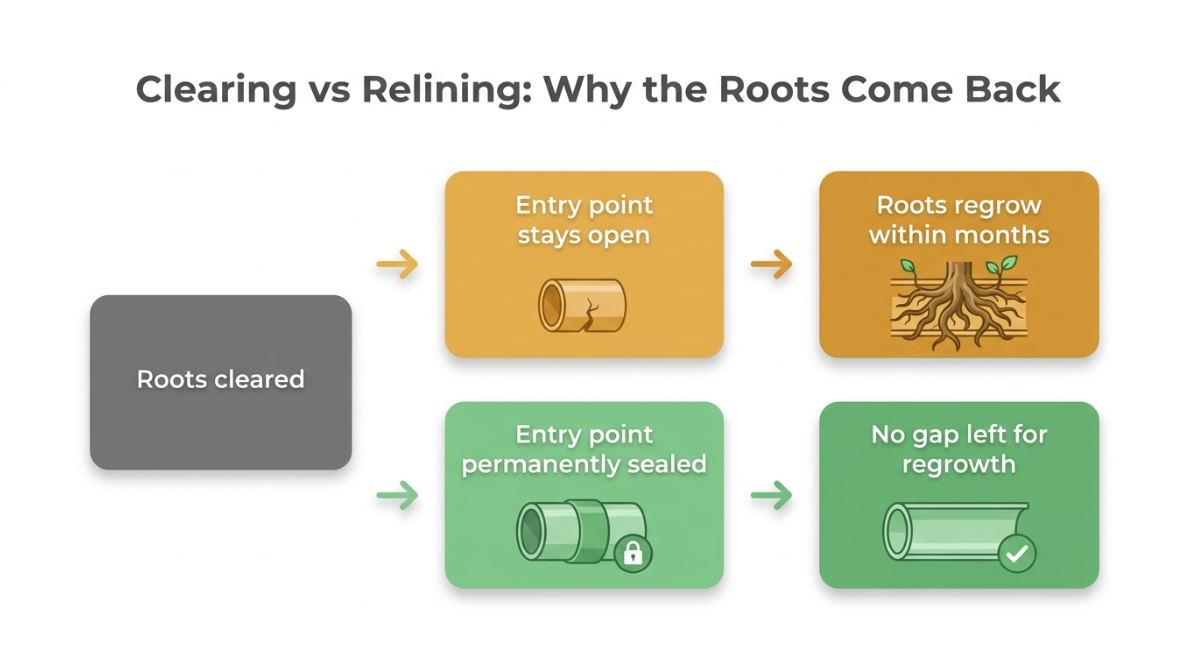
Here's the short version. Clearing removes the roots that are there right now, but it doesn't touch the crack or joint that let them in. As long as that entry point stays open, roots regrow into the same gap, often within six months to a year. Relining fixes the actual cause rather than the symptom, creating a new, seamless pipe with no crack or joint left for roots to exploit. Here's why that difference matters so much, and the honest exceptions worth knowing about.
Why tree roots get into your pipes in the first place
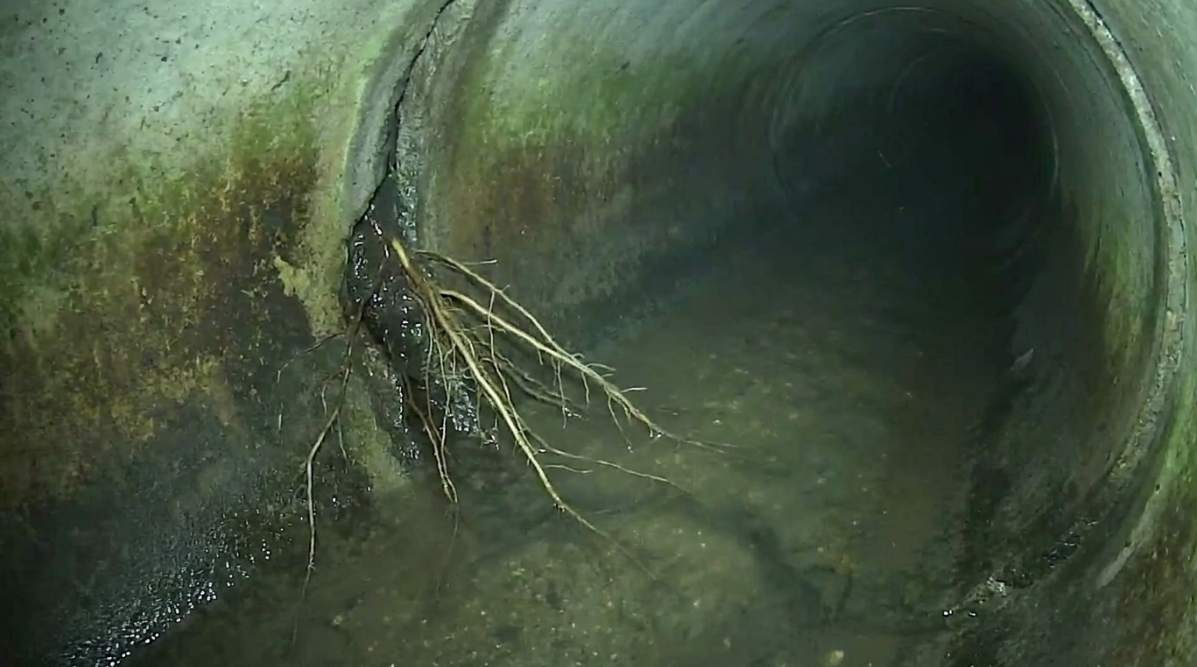
Roots don't break through a healthy, intact pipe on their own. In almost every case, they enter through something that's already there, a hairline crack, a loose or deteriorated joint, or a corroded section. Sewer pipes carry warm, nutrient-rich water, and that water releases vapour through any gap in the pipe. Roots follow that moisture trail directly to the exact spot the vapour is escaping from, then work their way in through the opening.
This is why the pipe's material and age matter so much. Older clay, concrete and cast iron pipes are laid in shorter sections with many joints, and the sealant between them breaks down over decades, giving roots plenty of potential entry points. Modern PVC pipe is more resistant simply because it runs in longer sections with far fewer joints and doesn't corrode, though it isn't immune if a joint is damaged or poorly sealed.
Why clearing alone doesn't actually fix the problem
This is the part that explains the whole recurring cycle. A mechanical auger or hydro jetting clears the roots that are currently blocking the pipe and restores flow, and it does that job well. What it doesn't do is close the crack or joint the roots came through in the first place.
Since that entry point is still open, and still leaking the exact moisture trail that attracted the roots to begin with, new roots find their way back to the same spot. Regrowth typically begins within six months to a year, sometimes faster with fast-growing species like willows or poplars. Clearing buys you working drains again. It doesn't end the intrusion, which is exactly why the blockage keeps returning to the same location rather than showing up somewhere new.
Why relining actually breaks the cycle
Relining works differently because it addresses the entry point itself, not just what's growing through it. The process creates a new, structural pipe inside the damaged section, seamless and jointless along its full length. We've covered the technical process in detail in our guide to how UV pipe relining actually works, but the part that matters here is simple: without a crack or joint anywhere along the relined section, there's nowhere left for roots to find their way back in.
At Wilco Relining, this is exactly why our UV-cured CIPP liner is backed by a 50-plus year guarantee. It isn't just a stronger patch over the same weakness, it's a genuinely different pipe with no vulnerability left for roots to exploit.
The honest exceptions worth knowing
Relining is the right long-term answer for recurring root intrusion, but it isn't the automatic first step for every blockage, and it's worth being straightforward about that.
If this is a first-time or isolated blockage, clearing and a CCTV inspection are still the sensible starting point. A camera survey shows exactly what's causing the blockage, roots specifically rather than a grease clog or another issue, confirms where the entry point actually is, and reveals the condition of the pipe. That's the same CCTV-first process we use before quoting any relining job, covered in our guide to pipe relining costs in Sydney.
And if a section of pipe has genuinely collapsed, rather than just cracked or had a joint fail, relining isn't possible on that section, since the liner needs an intact host pipe to be installed against. In that situation, replacement of the collapsed section is the honest answer, not relining.
What this actually saves you over time
If you've been paying to have the same blockage cleared two or three times a year, it's worth doing the maths properly. Each clear costs money and buys you a few months to a year before the same problem returns. Relining the actual damaged section is a larger cost upfront, but for a genuinely recurring root problem, it usually works out cheaper than repeat clearing within just a few years, and it stops the disruption entirely rather than managing it indefinitely.
Frequently asked questions
My pipes keep getting blocked by tree roots, what's the long-term fix?
Relining is the genuine long-term fix for recurring root intrusion, because it creates a new, seamless, jointless pipe inside the damaged section with no crack or joint left for roots to re-enter. Clearing alone removes the roots that are currently there but leaves the entry point open, so roots typically regrow within six months to a year. If this is a first-time blockage, a clear plus CCTV inspection is still the right starting point to confirm roots are the actual cause.
Why do tree roots keep coming back to the same spot after I clear my drain?
Because clearing only removes the roots themselves, not the crack or deteriorated joint that let them in. That entry point keeps leaking the exact moisture trail that attracted the roots in the first place, so new roots regrow into the same gap, usually within six months to a year, rather than the blockage appearing somewhere new.
Does relining actually stop tree roots permanently?
Yes, for the relined section. Because the new liner is seamless and jointless along its full length, there's no crack or gap left for roots to find and exploit, which is why a properly installed reline is expected to last 50 years or more without the same root intrusion recurring.
Do I need a CCTV inspection before relining for tree roots?
Yes, and it matters more than it might seem. A camera survey confirms that roots, rather than a grease clog or something else, are actually the cause, shows exactly where the entry point is, and reveals whether the pipe is a good candidate for relining or has collapsed and needs replacement instead. This is the standard first step before any relining quote.
Can a fully collapsed pipe be relined?
No, not the collapsed section itself. Relining needs an intact host pipe for the liner to be installed against, so a section that has genuinely collapsed, rather than just cracked or had a joint fail, needs to be replaced rather than relined. This is a relatively uncommon outcome, and a CCTV inspection will confirm which situation you're actually dealing with.
Is relining cheaper than repeatedly clearing tree roots?
Often, yes, once you look at it over a few years rather than one job at a time. Repeat clearing costs money every time the roots regrow, typically every six months to a year, with no end point. Relining costs more upfront but permanently removes the entry point, which for a genuinely recurring problem usually becomes the cheaper option within just a few clearing cycles.
Stop clearing the same blockage
If tree roots keep coming back to the same spot, the honest fix isn't clearing it again, it's closing the entry point that keeps letting them in.
Wilco Relining starts with a free CCTV inspection to confirm exactly what's happening in your pipe, then gives you a fixed price for a UV-cured, CIPP-certified reline backed by a 50-plus year guarantee. Call 1300 512 737 or get in touch online to book your inspection.
This article provides general information about tree root intrusion and pipe relining and is not a guarantee of outcomes for any specific pipe. Suitability depends on the condition of your pipe, confirmed by CCTV inspection. Contact a certified relining specialist to assess your situation.